
Stop your single point of failure.
You were promoted for being an excellent engineer. Nobody handed you a manual for running the organization.
- Free
- Ten questions. Just five minutes .
- No email required

This is an operational failure, not a personal one.
18% of enterprise technology projects suffer a 41% schedule slip and 130% budget overrun.
We help leaders protect their budget and schedule by diagnosing their biggest bottleneck and fixing it in a two-day sprint. The five minute diagnostic shows you which one is slowing your team down.
Your most valuable engineers are being used as human search engines
Your team can only move as fast as the handful of people everyone has to ask. That is the expert bottleneck, and it stays invisible until a deadline finds it.
-
Junior staff are stalled
Every complex task requires pinging a senior architect, waiting hours for context, or sitting through repetitive one-on-one walkthroughs.
-
Senior staff are burnt out
Your top engineers spend 30–40% of their time answering questions instead of doing the design work you hired them for.
-
What they know is at risk
Decades of know-how sits in the heads of a few senior people — some close to retirement, all of them getting calls from recruiters.
If your two most relied-on engineers left tomorrow, what would happen to your schedule?
Turn what your experts know into something the whole team can use
We work with engineering leaders to get that knowledge out of a few heads and into a system the team uses every day. You stop being in the middle of every decision, and what one person knows becomes something the organization owns.
Why documentation alone fails
Most organizations answer this by telling their seniors to write down what they know. It fails every time: seniors do not have time to write docs, docs are obsolete forty-eight hours after they are published, and junior engineers do not read them anyway because they lack the context to know which page matters.
Get your best engineers out of the question queue, keep what they know when they leave, and let the team move without waiting on you — no 70-hour weeks required.
Take the Bottleneck DiagnosticThe experience the framework came out of
None of this started in a coaching certification. It started running large technical organizations under the conditions your programs run under.
-
Fortune 100 Executive Leadership
Former Engineering Director managing 1,200+ employees and driving hundreds of millions of dollars in enterprise revenue.
-
Billion-Dollar Capture & Delivery
Track record as a premier Program Manager, securing billions of dollars in competitive contract awards and scaling complex technical organizations.
-
Founder & Executive Performance Coach
Founder of Crooz Coaching, translating hard-won enterprise and military experience into battle-tested frameworks that help high-impact technical leaders scale without burnout.
-
10 Years of Decorated Military Service
Served a decade in the U.S. Air Force, instilling a relentless commitment to leadership excellence, resilience, and high-stakes execution.
The two-day bottleneck sprint
One bottleneck, two days, and a working system your team keeps. Every sprint runs the same two phases against whichever of the four bottlenecks your diagnostic names first. One at a time is the point: organizations that try to fix everything at once move nothing.
- Executive Sign-Off Overload Delegation matrix (RACI) — frees 10+ hours of executive time a week.
- Hero Culture Burnout Tiered escalation matrix — restores senior engineering velocity by around 25%.
- Program Scope Creep Agile change control board — stops unbudgeted engineering work.
- Tooling & Test-Bench Starvation Digital asset Kanban board — minimizes idle time waiting on hardware test.
2 days, one bottleneck
- Day 1: Root cause analysis A structured root-cause analysis on one bottleneck, built from your own calendar, timesheets and approvals.
- No time wasted Everything here is work you would do anyway. Nothing is theoretical or a placeholder for real thinking later.
- Rapid results The fix goes live inside your team's workflow and you keep it when the sprint ends.
The session is free. We agree which bottleneck the sprint targets before anything is scoped.
Field notes
-
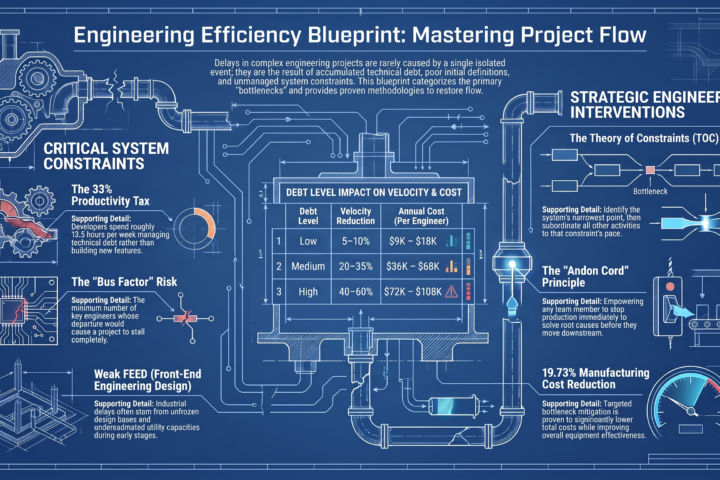
The Five Invisible Anchors Stalling Your Project
The Productivity Paradox Complexity Kills In complex systems architecture, we often observe a phenomenon where individual resource utilization is at…
-
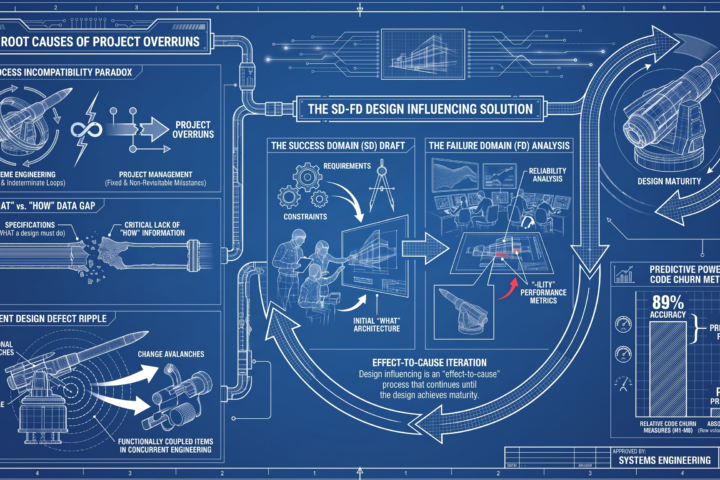
Why Complex Engineering Projects Fail (Even with Expert Teams)
The Ghost in the Machine The Cycle of Recurring Frustration In the high-stakes world of complex systems development, there is…
-
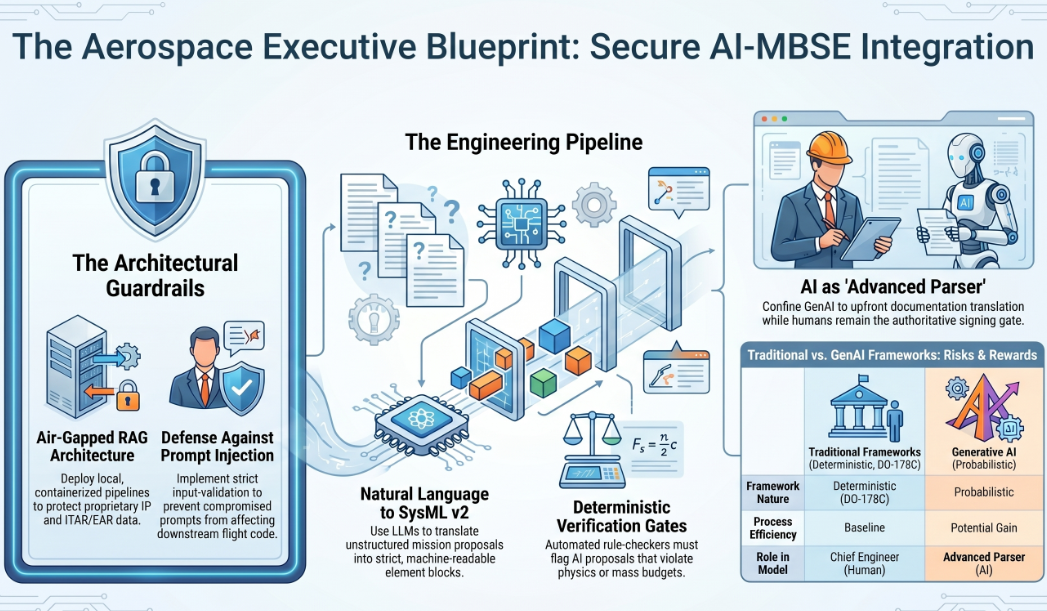
‘Moving Fast’ without peer-reviewed AI is Career-Limiting! Every aerospace C-suite is asking the same question right now: “How do we inject AI into our engineering pipeline to compress cycle times?”
But the moment you connect a Large Language Model (LLM) to your Model-Based Systems Engineering (MBSE) environment, you open a…
Find the bottleneck. Then fix in 48 hours.
Book a free strategy session and we will plan a two-week sprint on whichever bottleneck is hurting you most. Not sure which one that is? The diagnostic tells you in about five minutes.
- Free strategy session
- No pitch deck
- Nothing export-controlled needed